
Boy Racer


mdrace

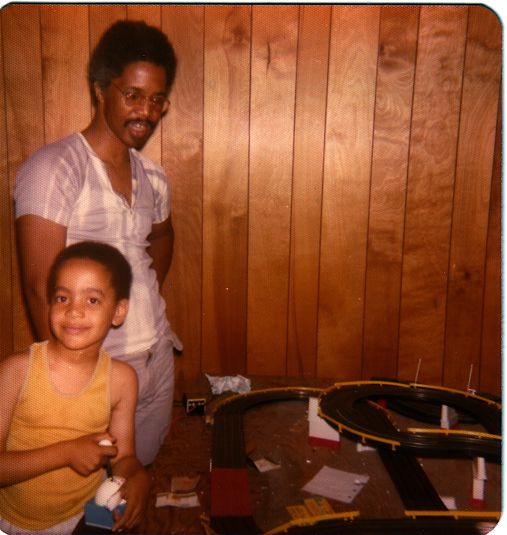
Growing up, I always had a deep connection with cars. In addition to living in the Midwest, my Dad was a reformed street racer and Corvette fanatic (“All Corvettes are red. The rest are just mistakes”). With all of those things going for me, I didn’t have much of a choice in the matter.

When I was about nine years old, I was lucky enough to receive an electric slot car race set as a gift. In a world before computer gaming, this was the best thing since sliced bread. I, along with my sisters, spent hours racing these small cars around the electrified plastic track. Competitions were intense, and every racer looked for any opportunity to get an advantage. Cleaning the rubber tires for better grip. Wiping the electric contacts for better connections. Learning how to sling-shot out of a turn. Over time, these lessons not only helped us win races, but they indirectly taught us how things like friction, heat, and electricity impact us in the physical world. In a small way, they also helped us build a personal relationship with our surroundings.

Most kids today who have a similar “racing” experience will do so through  computer simulations (racing games). Video game franchises like Gran Turismo and Need for Speed offer incredible simulations of high performance racing, featuring exotic sports cars and Formula 1 racers. The games provide players with as much enjoyment (if not more) as I experienced playing with my slot car set in the basement of my family’s home.

While neither experience will teach a nine year old how to actually drive a race car, there is an important difference between the two experiences. The kid playing a racing simulation video game will undoubtedly have a lot of fun, and will likely get a better understanding of what it’s really like to sit inside a Ferrari. The gamer will not, however get the same object lesson of how elements of the physical world behave. He or she will experience a SIMULATION of it. A theoretical take on how the natural world behaves. This is a simulation in which the game developer has “tweaked” real world physics to enhance the excitement of the game. As exciting and fun as these games are, they do not fully replicate the physics of the real world.

As a result, the gamer’s understanding of the physical world, and his relationship with it, may be more distant and less personal. And if people learn from personal experience, the computer gamer (when it comes to understanding the world around him) will come away from the experience poorer than the kid with the physical world, slot car track. While this is a small point today, more and more of our children’s’ lives are experienced online. Assuming that trend continues, the time children spend experimenting with their surroundings will decrease. Where will they develop their relationship with the physical world? When the virtual world provides a more enjoyable experience than the physical, what will motivate that child to have those critical physical experiences?

And isn’t our connection to the natural world around us part of what makes us human? It’s also part of what helps us define our relationship with God. Many of Jesus’ parables are based on elements in physical world. How relevant will the parable of the Three Soils be if your only understanding of earth and growing things comes from playing Farmville?

Please share your thoughts in the comments…

60 Minutes Report: Robots, AI and Job Growth

On their January 13th episode, 60 Minutes aired this report on the next generation of robots and their growing impact on the US (and World) economy. Most of us may be familiar with the concept of robots being used in factories to build cars and appliances. However, this report showed that, with the increased sophistication of artificial intelligence software (aka A.I.), robots are taking over jobs in hospitals, law offices, and other “safe” positions.

The core dilemma this report raises is that advancing technology is disrupting so many industries, so quickly and the new technologies aren’t creating enough jobs to employ the workers they displace (even with re-training).

Definitely a must-see…

Step Into a World…

Image

Imagine we lived in a world that had never seen, heard of, or experience alcohol. Ever. Then imagine that something or someone enters the picture and introduces this world to alcohol. 

People slowly begin to try it, and they love it. It tastes great. It makes people feel good. It makes parties more fun.

As humanity learns how to make it, a huge industry is created. People find jobs. Economies grow. Everyone’s happy. 

With all this success, alcohol is viewed as the new wonder substance. It seems to make everything better. The success stories are all over the news and in every business magazine. Alcohol is the future. 

Since everything is going so well, humanity starts to use alcohol for EVERYTHING. To power cars, as a cleaning agent, to help school children with ADD, as a laxative, to help babies sleep – everything. The success stories continue. 

As the world economy becomes more dependent on the growing alcohol industry, stockholders push for more growth. This means finding new uses for alcohol. Pregnant women are told to drink it as a prenatal supplement. Doctors use it to treat heart attacks and cancer. 

At this point, serious problems start coming to the surface. Babies start being born with deformities. Alcoholism amongst 3rd graders becomes a growing problem. Forty percent of the drivers on the road are drunk, so traffic fatalities go through the roof. 

People start to protest. Some people conclude that alcohol is evil and we should eliminate it altogether. Other people say it’s a fundamental part of life and a pillar of the economy. To eliminate it would be insane. In fact, we haven’t even touched the surface of what alcohol can do. 

Who’s right? 

In the story above, there’s nothing wrong with alcohol. It IS a great social lubricant. It is part of the economy. And it does have many other important uses. 

But alcohol SHOULD NOT be given to children or pregnant mothers. Or to people who are, or will be driving. That is the WRONG way to use alcohol.

 With the introduction of alcohol to this imaginary world, the people learned that for some things alcohol, when used correctly, is great.

The people also needed to learn that there are some circumstances where alcohol should NEVER be used. It hurts not only the user, but the people around him or her.

 At this point, I would argue that our society is still in the first part of the previous story. The prevailing attitude is – “more technology is always better”, and it should be used everywhere, and for everything. We know all the upsides associated with new technologies, and the potential downsides are either not investigated or dismissed outright. The primary barometer of whether something is a good or bad use of technology is it’s financial success. If a new device or service is profitable or has a lot of users, then it is deemed an innovation, irrespective of its larger impact on society.

So – at what point will we reach the second part of the story?
In what areas should technology NOT be used?
How should we judge whether a new technology is truly an innovation or not? 

Please share your thoughts in the comments…

Getting Past Wonder

Image

Thinking back on my childhood, I vividly remember the first time I got lost in a public place. I was about five or six years old. My family went to an open-air fruit market not too far from our home. As soon as we pulled into the parking lot and got out of the car, I immediately went into sensory overload. The place was full of people. More than that, the colorful array of fruits and vegetable seized my complete attention.

“What’s that purple thing?”
“Why is that celery red?”
“What’s that smell?”

I was also a boy with a healthy appetite (my clothes always came from the “Husky” section of the Boys Department). Therefore, seeing all these foods sent my mind racing…

“Are those strawberries? Maybe Mom will bake a pie!!!”
“Whoa – did that guy just eat one of those grapes? Can I have some?”
“Look!!! That lady is giving out samples!!!”

I was so caught up in a mixture of known favorites, new choices, and tempting possibilities that I lost track of where I was. As I ran from booth to booth, trying new fruits and marveling at things I had never seen before, I became separated from my parents. I spent the next 10 minutes doing what any sensible child would do in this situation. I started screaming my head off! My parents didn’t hear my cries, but an older woman who heard me figured out I was lost, and helped me eventually find the rest of my family.

Now that I’m older, I can successfully navigate a fruit market on my own. That doesn’t mean I still don’t get caught up in wonder over new things. Instead of food, now it’s new technology.

New mobile apps, social media sites, and online services spring up on a daily basis and excite our imaginations. They give us the opportunity to do things we’ve never been able to do before. Beyond just adding convenience, these new devices make us feel like we are living in “The Future”.

BTW – The Future = an always clean, minimalist utopia that has every cool thing you’ve ever seen in a sci-fi movie. It’s a place where everything either floats, is made of glass, or wears spandex.

I’m enthralled with the idea of living in “The Future”. And apparently I’m not alone. The rate at which society is eagerly adopting new technologies and services is astounding. Facebook grew to from 1 million members in 2004 to over 1 billion users in 8 years. Google’s web-based email service, Gmail, has grown from zero to 425 million members in roughly the same time period.

When the iPad was released in April 2010, it invented a new category of device – the Tablet. In just two and a half years, more than 100 million iPads have been sold. For comparison, the largest library in the world (Library of Congress) only has 34.5 million books.

Along with these new devices, we have become just as smitten with new apps and services. In less than four years, the Apple has sold 35 billion iPhone & iPad apps from it’s App Store. Google has sold 25 billion apps through its Android apps store in roughly the same time period.

In less than a decade – we have all fallen hard and fast for “The Future”. We are fully caught up in the wonder that these new devices bring, along with the potential that they bring to our lives.

While it may be Post-Traumatic Stress Disorder on my part, I can’t help but be concerned that our feeling of wonder when it comes to new technologies may be preventing us from keeping track of what’s important. We consumers tend to focus more on what these new devices can do for us, and not enough on what they may be doing to us. We are eager to sign up for the newest service so we can gain a new convenience, but we don’t spend enough time thinking about what we may be giving up.

The goal of this site is to hopefully get those in the Christian Church past the point of wonder when it comes to technology. To get beyond the “gee whiz/that’s so cool” initial response, and begin to thinking critically about how these new technologies are impacting our relationship with Christ and each other. Posts on this site will be directed at provoking thought and discussion about the direction technology is taking both the Church and society. We also hope to look at the impact these new technologies are having on the Church’s ability to fulfill its mission.

I hope you will join us…